Prices Incl. VAT
Yes
No
A Practical Guide to Extruded Acrylic for Home Improvements & DIY Projects
Extruded acrylic sheet (PMMA) is a lightweight, transparent plastic commonly used as an alternative to glass for household projects. It offers excellent clarity, consistent thickness and competitive pricing, making it a popular choice for DIY applications.
From picture frames and cabinet doors to secondary glazing and decorative panels, here are ten frequently asked questions to help you choose the right extruded acrylic sheet.
1. What Is the Difference Between Extruded and Cast Acrylic?
Both materials offer excellent transparency, but they are manufactured differently.
Extruded acrylic is produced through a continuous process, generally providing tighter thickness tolerances and a lower price than cast acrylic. Cast acrylic is often preferred for detailed engraving and certain specialist fabrication processes.
For everyday home projects, extruded acrylic can be a practical, cost-effective choice.
2. What Can Extruded Acrylic Be Used for Around the Home?
Extruded acrylic is suitable for many household applications, including:
Picture frames and display cases
Cabinet doors and decorative furniture panels
Secondary glazing and internal window covers
Lightweight protective screens
Decorative wall panels and suitable shelving
The best material and thickness depend on the size, support and intended use of the panel.
3. Is Extruded Acrylic as Clear as Glass?
Clear extruded acrylic offers excellent optical transparency, with light transmission of approximately 92% for typical clear grades.
It weighs around half as much as glass and is easier to handle and fabricate, making it useful for picture framing, displays and suitable glazing applications.
However, acrylic scratches more easily than glass and is not a direct substitute for safety glazing.
4. Does Extruded Acrylic Scratch or Break Easily?
Extruded acrylic has better impact resistance than ordinary glass, but it is not unbreakable.
Its surface is softer than glass and can become scratched if cleaned with abrasive materials.
Minor scratches may be improved using a suitable acrylic polish. Where greater impact resistance is required, polycarbonate may be a better option.
5. What Thickness of Extruded Acrylic Should I Choose?
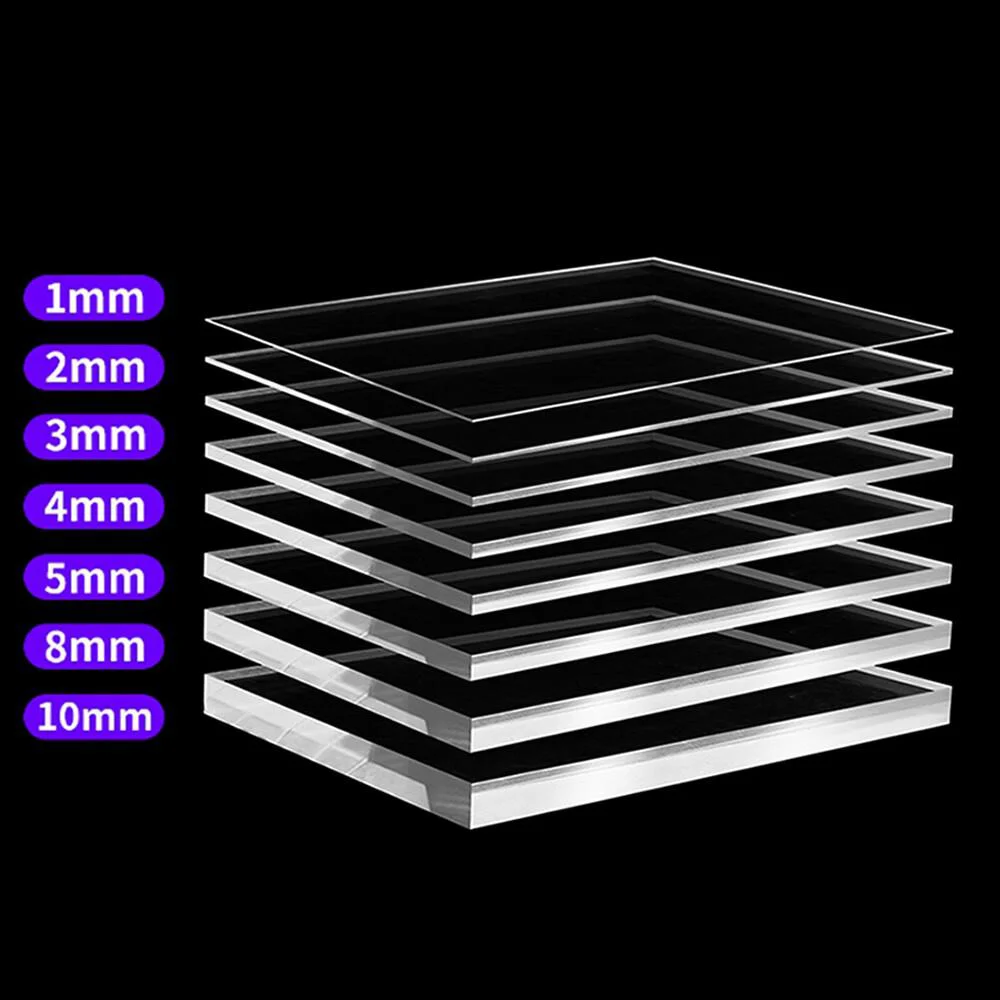
Common extruded acrylic thicknesses include 2mm, 3mm, 4mm, 5mm and 6mm.
As a general guide:
2mm: Small picture frames and lightweight decorative inserts.
3mm: Display panels, cabinet inserts and small DIY projects.
4mm: Decorative panels and applications requiring additional rigidity.
5mm: Larger supported panels and selected secondary glazing projects.
6mm: Projects needing greater stiffness and durability.
These are general examples rather than fixed specifications. Larger panels, shelving and glazing installations require thickness and support checks.
6. Can I Cut and Drill Extruded Acrylic Myself?
Yes. Extruded acrylic can be cut and drilled using suitable DIY tools.
For thin sheets, a suitable scoring tool may be used where the material and manufacturer permit. Thicker sheets generally require appropriate saws or machining equipment.
When drilling, support the sheet properly, use suitable drill bits and avoid excessive pressure or heat, which can cause cracking.
7. How Do I Clean Extruded Acrylic Sheet?
Use lukewarm water, mild washing-up liquid and a clean microfibre cloth.
Avoid abrasive sponges, scouring powders, acetone and aggressive solvent cleaners, which can scratch or damage the surface.
Remove loose dust before wiping to help maintain a clear finish.
8. Is Extruded Acrylic Waterproof and Suitable for Bathrooms?
Extruded acrylic is moisture-resistant and suitable for selected decorative bathroom and kitchen applications.
It can be used for suitable vanity splashbacks, cabinet panels and protective wall features when correctly installed.
However, standard extruded acrylic should not automatically be used as a complete waterproof shower system or as safety glazing in shower enclosures.
9. Can Extruded Acrylic Withstand Heat and Sunlight?
Suitable UV-stable extruded acrylic grades offer good resistance to sunlight and weathering.
However, acrylic can soften or distort when exposed to excessive heat. It should not be installed directly behind hobs, near open flames or close to high-temperature appliances unless specifically approved.
Allow for thermal expansion when fitting larger panels or using acrylic outdoors.
10. Is Extruded Acrylic Cheaper Than Cast Acrylic and Glass?
Extruded acrylic is generally more economical than cast acrylic, particularly for standard sheet sizes and repeat production.
Compared with glass, the overall cost depends on thickness, dimensions, cutting requirements and installation.
For many domestic DIY projects, extruded acrylic offers a useful balance of clarity, weight, ease of fabrication and price.
Shop Extruded Acrylic Sheet for Home & DIY Projects
At Brissco, we supply acrylic sheet materials for home improvements, picture framing, secondary glazing, decorative panels and DIY applications.
Explore our acrylic sheet range or contact our team to discuss suitable thicknesses, finishes and dimensions for your project.
Need to see it before you buy? We offer samples of our uPVC building products to help you choose the perfect fit. Simply get in touch through our contact page, and we’ll be happy to assist!

We use cookies on this site to enhance your user experience. For a complete overview of all cookies used, please see our Privacy Policy