Prices Incl. VAT
Yes
No
SKU: MWHS250725
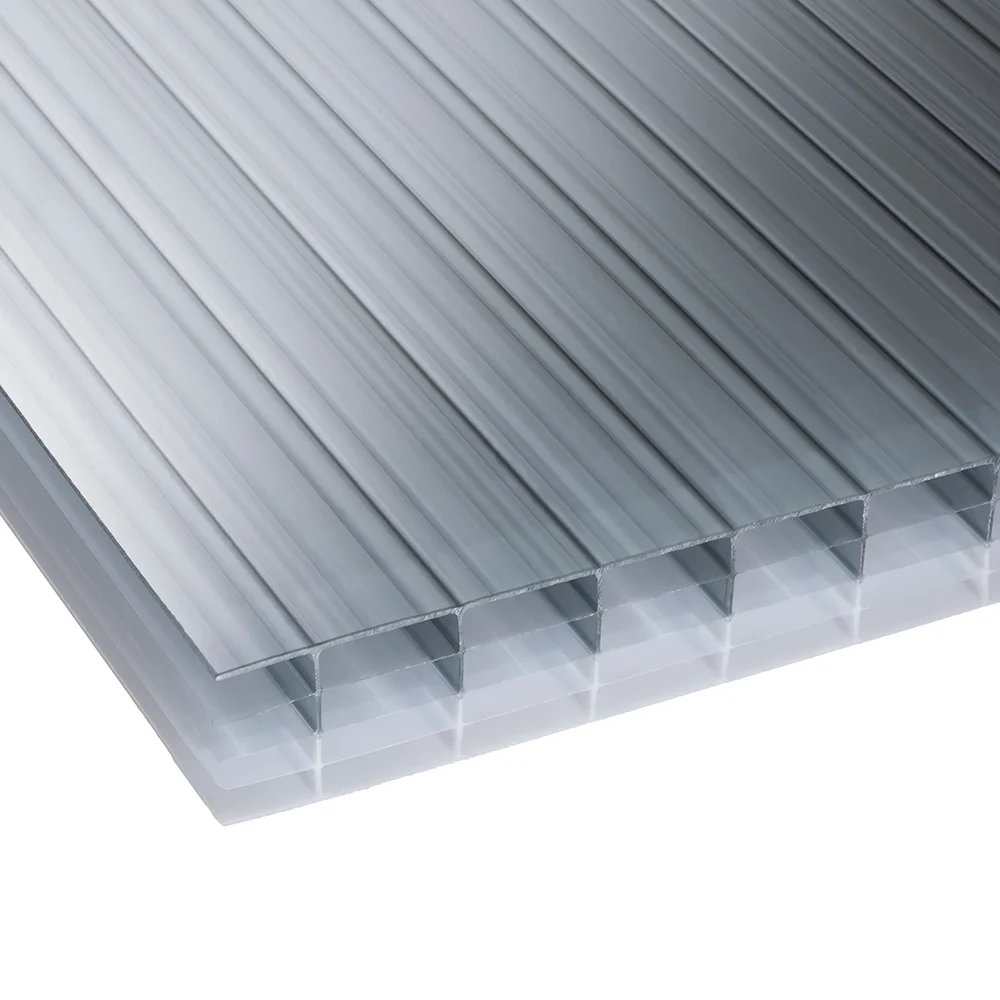
Advanced Heat-Reflective Technology: Features a two-tone heat-reflective outer layer and opal inner layer, helping reduce solar heat gain by up to 50% while allowing soft, diffused natural light to enter. The opal underside also reflects artificial lighting for a clean, ceiling-like appearance.
Excellent Thermal Insulation: Manufactured with a 25mm thick, 7-wall multiwall polycarbonate structure and a U-value of 1.4 W/m²K, helping maintain more comfortable temperatures throughout the year while reducing noise from rain and hail.
99.9% UV Protection: Features a co-extruded UV-protective layer that blocks up to 99.9% of harmful UV rays, helping protect against discolouration and yellowing. The marked UV-protected side must face towards the sun during installation.
Strong, Lightweight & Fire Rated: Durable high-impact polycarbonate roofing sheet combines excellent strength with lightweight construction for easier handling and installation. Features a Class 1 fire rating to BS 476 Part 7 and good chemical resistance.
Ideal for Conservatories & Outdoor Roofing: Suitable for conservatory roofs, sunrooms, pergolas, gazebos, canopies, covered walkways and rooflights, providing a practical heat-reflective glazing solution for sunny and south-facing installations.
Opal Heatshield 25mm Multiwall Polycarbonate Sheet
Solar Control Two-Tone Roofing Sheet with Opal Underside for Conservatories, Lean-Tos & Verandas
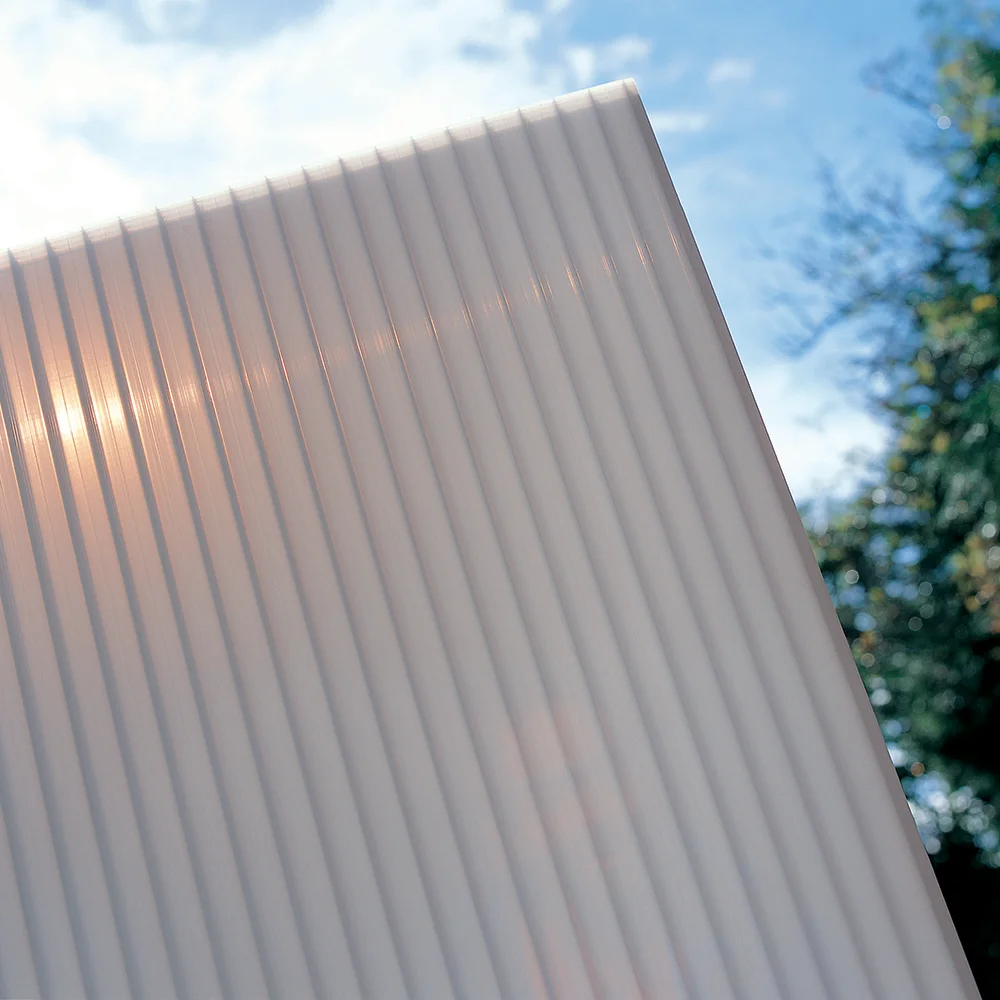
Opal Heatshield is a 25mm multiwall polycarbonate roofing sheet with two different tints. The top surface is a reflective solar-control tint that bounces back much of the sun's heat. The underside is opal, so the light that comes through is soft and even. It's designed for south-facing conservatories, sunrooms and outdoor rooms that get too hot and too bright in summer.
The 25mm sheet has a seven-wall structure, so there are several layers of trapped air across its thickness. That gives a U-value of about 1.4 W/m²K, which keeps rooms warmer in winter as well as cooler in summer. The sheet reflects up to 50% of solar heat and lets through about 7% of light. The result is cool, glare-free daylight rather than harsh direct sun. It weighs about 3.1kg per m², so it's far lighter than glass and puts much less load on the roof frame.
The outer face has co-extruded UV protection that blocks 99.9% of UV. This protects the sheet from yellowing and weathering, and protects furniture and flooring underneath. The UV side is marked on the protective film and must face the sun when fitted.
Polycarbonate is highly impact resistant and stands up well to hail. The multiwall structure also cuts down the noise of rain on the roof compared with thinner sheets. At night, the opal underside reflects room lighting back down, which gives a finished, ceiling-like look.
Key Features
Ideal for Conservatories, Sunrooms, Lean-Tos & Verandas
Opal Heatshield suits conservatory roofs that overheat in summer. It's especially useful on south- and west-facing roofs, where clear or bronze sheet lets in too much heat and glare. It's also a good choice for lean-tos, sunrooms, verandas, pergolas, carports and covered walkways where you want a bright but shaded space.
The roof needs a minimum pitch of 5° so rainwater runs off. The ribs inside the sheet should run down the slope, never across it. Fit the sheet with glazing bars and seal the ends with aluminium anti-dust tape at the top, breather tape at the bottom and polycarbonate end closures / U-profile. For a clear, brighter roof instead, see 25mm Clear Multiwall Polycarbonate. For a lighter-duty roof, see 16mm Multiwall Polycarbonate.
Reliable Performance for Long-Lasting Roofing
For a long-lasting roof, store the sheets flat, covered and out of direct sun before fitting. Fit them with the UV-marked side facing up and take off all protective film straight after installation. Drill any fixing holes oversize, between the ribs and at least 40mm from the edge, and don't overtighten. This leaves room for the sheet to expand and contract with temperature.
Use only a low-modulus neutral-cure silicone that is compatible with polycarbonate, such as polycarbonate-compatible silicone. General-purpose silicones can crack and damage polycarbonate.
To clean, rinse with lukewarm water, then wash gently with mild soapy water and a soft sponge or cloth. Don't use brushes, abrasives, solvents or strong alkaline cleaners, as they can damage the UV surface.
Whether you're cooling an overheated conservatory or roofing a new lean-to or veranda, Opal Heatshield 25mm multiwall gives a bright, insulated and shaded roof that is built to last.
1. What is Opal Heatshield 25mm multiwall polycarbonate sheet?
Opal Heatshield is a 25mm multiwall polycarbonate roofing sheet with two tones. The outer layer reflects heat and the inner opal layer diffuses light. It's made for conservatory roofs, sunrooms, lean-tos, pergolas, rooflights and other covered outdoor spaces where you want to cut glare and heat build-up.
2. Will Opal Heatshield polycarbonate keep my conservatory cooler?
Yes. The sheet can cut solar heat gain by up to 50%, and it softens and diffuses daylight. It has a shading coefficient of 0.3. That makes it a popular choice for south-facing conservatories and sunrooms that get uncomfortably hot in summer.
3. How much light does Opal Heatshield let through?
This is a solar-control sheet, so it lets through much less light than clear or standard opal polycarbonate. Light transmission is around 7%, and the light that does come through is soft and diffused, with no harsh glare. At night the opal inner face reflects artificial light, so the roof looks more like a ceiling. If you want a brighter room, a clear or standard opal sheet may suit you better.
4. How well does 25mm Opal Heatshield polycarbonate insulate?
The 25mm sheet has a seven-wall structure and a U-value of 1.4 W/m²K. The air trapped between the walls gives good thermal insulation. That helps keep heat in during winter and makes the room usable for more of the year.
5. Is Opal Heatshield polycarbonate UV protected, and which way up does it go?
Yes. The sheet is UV-resistant on one side and blocks 99.9% of UV radiation. The UV-protected side faces the sun. It's marked by a protective film with writing on it, and the other side has no UV coating, so it must face inwards. Fitting the sheet upside down can cause early discolouration and may void the warranty.
6. What is the minimum roof pitch for Opal Heatshield multiwall polycarbonate?
Multiwall polycarbonate needs a minimum roof slope of 5° so rainwater can run off. The ribs (flutes) should run vertically or up the slope, which lets any condensation drain out of the sheet. www.brettmartin.com
7. How do you install Opal Heatshield 25mm polycarbonate sheet?
Fit the sheets into suitable 25mm glazing bars. Seal the top edge with aluminium sealing tape to keep out moisture, dust and insects, and fit breather tape at the bottom to limit condensation. Open ends must be sealed with sheet closures. Polycarbonate expands and contracts with temperature, so drill oversized fixing holes and don't overtighten fixings. Use only a low-modulus neutral silicone, because all-purpose silicone can cause cracking, and remove all protective film straight after installation. Widths over 900mm should not be used without the correct supports.
8. Can Opal Heatshield polycarbonate sheet be cut to size?
Yes. Multiwall polycarbonate can be cut with a fine-tooth circular saw or a hand saw held at a shallow angle. After cutting, clear any swarf (cutting debris) out of the flutes, then tape and seal the ends before fitting. Until installation, store the sheets flat in a cool, dry place. www.brettmartin.comwww.thepolycarbonatestore.co.uk
9. Is Opal Heatshield polycarbonate strong and fire-rated?
Yes. Multiwall polycarbonate is light but rigid, and it is highly impact resistant, so it's a safer choice than glass for roofing. The 25mm sheet weighs about 3.1kg, holds a Class 1 fire rating to BS476/7, and helps reduce rain and hail noise.
10. How do you clean Opal Heatshield polycarbonate roofing sheets?
Rinse with lukewarm water, then wash with lukewarm water and a mild soap or household cleaner using a sponge or soft cloth. Rinse again and dry with a soft cloth. Don't use brushes, sharp tools, abrasives or highly alkaline cleaners. Test any cleaner on a small area first, because some products sold as polycarbonate-safe can still damage the UV-protected surface.
 Lead Time:
Collection & Local Delivery: 3–5 working days
 Est Delivery:
National Delivery: shipped direct from manufacturer, see map on our Delivery Information page

10mm-25mm Snap Down White Glazing Bar 2.0m
Lead Time - Into Order 2-3 Days

10mm-25mm Snap Down White Glazing Bar 2.5m
Lead Time - In Stock

10mm-25mm Snap Down White Glazing Bar 3.0m
Lead Time - In Stock

10mm-25mm Snap Down White Glazing Bar 4.0m
Lead Time - In Stock
Need to see it before you buy? We offer samples of our uPVC building products to help you choose the perfect fit. Simply get in touch through our contact page, and we’ll be happy to assist!

We use cookies on this site to enhance your user experience. For a complete overview of all cookies used, please see our Privacy Policy